
Thailand & Laos
February 22 – March 10, 2027


Thailand & Laos Tour
There is a Thai proverb that says, “When you are among swans, you become a swan.” On this 17-day Thailand and Laos Tour, you can put that wisdom to the test among sandpipers, bulbuls, babblers, leafbirds, laughingthrushes, and more. Join Apex for a bird-rich exploration of Indochina, blending wild landscapes with remarkable cultural sites. Explore Thailand’s best birding hotspots and national parks, ascend forested mountains that mark the eastern reaches of the Himalayas, see spectacular temples, and visit traditional hill tribe communities near the Thai-Myanmar border. In Laos, stroll the serene streets of Luang Prabang, a UNESCO World Heritage Site, and explore caves along the sacred Mekong River. Along the way, search for rare Spoon-billed Sandpipers, Ratchet-tailed Treepies, and Grey Peacock-Pheasants—plus Asian Elephants, Sun Bears, Gaurs, and Indochinese Grey Langurs. The result is a richly layered introduction to the extraordinary breadth and beauty of Indochina.


Destinations
- Travel by Air
- Travel by Road
- Travel by Boat
- Travel by Bullet Train
- Travel by Rail
- Travel by Dog Sled
- Day 1
- Day 2
- Day 3
- Day 4
- Day 5
- Day 6
- Day 7
- Day 8
- Day 9
- Day 10
- Day 11
- Day 12
- Day 13
- Day 14
- Day 15
- Day 16
- Day 17
-
Monday, February 22: Arrive Bangkok, Thailand
Arrive in Thailand’s mega-capital (home to one quarter of its population) and transfer to your hotel overlooking the bustling Chao Phraya River. This evening, take a dinner cruise along the river, aboard the elegantly converted Manohra rice barge. Meet your expedition team and fellow travelers as you take in the iconic sights of this fascinating metropolis, cruising past the glittering Wat Arun (or “Temple of Dawn”), Wat Pho (or “Temple of the Reclining Buddha”), and the magnificent Grand Palace, fully illuminated and awe-inspiring. Overnight at Anantara Riverside Bangkok Resort.
-
Tuesday, February 23: Bangkok / Kaeng Krachan National Park
After breakfast, begin your journey south through Phetchaburi Province to Laem Phak Bia, a coastal area along the Inner Gulf that provides crucial feeding and roosting habitats for thousands of shorebirds. This time of year, you may well spot the critically endangered Spoon-billed Sandpiper, as well as Terek and Broad-billed Sandpiper, Bar-tailed and Black-tailed Godwit, Malaysian and White-faced Plover, and many egrets and storks, among the roughly 50 species that overwinter here. Next, head west to Kaeng Krachan National Park, stopping for lunch along the way. This afternoon, enter the park—Thailand’s largest, at over 1,100 square miles. Prepare to be greeted by troops of Stump-tailed Macaques as you arrive at your hotel. Kaeng Krachan represents the southernmost extremity of many northern bird species, and the northern outpost of southern species. All told, over 200 species can be found here. Look for Grey Peacock-Pheasant, Green-legged and Bar-backed Partridge, Greater and Lesser Necklaced Laughingthrush, as well as bulbuls, leafbirds, flycatchers, babblers, and warblers. Kaeng Krachan is also the only place in Thailand where Ratchet-tailed Treepie can be seen. Mammals you might find include the ground-dwelling Northern Tree Shrew and the diminutive Lesser Mouse Deer. Dinner and overnight at The Tree Riverside at Kaeng Krachan.
-
Wednesday, February 24: Kaeng Krachan
Rise before dawn for a full day in the park. Drive up toward Phanoen Thung Summit and board 4×4 vehicles. Head up to the summit and take in the panoramic views of the surrounding park. After a picnic breakfast, look for Black-naped Oriole, Long-tailed Broadbill, Great Slaty Woodpecker, Red-bearded Bee-eater, and Swinhoe’s Minivet. Exploring the park, you can also watch for the elusive Sun Bear and the melanistic (black-coated) form of the Asian Leopard. You might also see White-handed Gibbons, Black Giant Squirrels, Gaurs (Asian Bison), Golden Jackals. and clouds of butterflies. This afternoon, visit Baan Song Nok (which literally translates to “A Home to Spot Birds”). Highlights here include the Kalij Pheasant, Large-billed Scimitar Babbler, Red-legged Crake, and large flocks of Greater and Lesser Necklaced Laughingthrush. Overnight at The Tree Riverside at Kaeng Krachan.
-
Thursday, February 25: Kaeng Krachan – Kui Buri National Park
After breakfast, head south out of Kaeng Krachan to Kui Buri National Park, the best destination in Thailand to spot Asian Elephants. Stop at a village just outside the park to learn how this community has adapted to co-exist with the elephants. See their elephant-deterrent crops, learn how they make paper from elephant dung and pineapple, and see the silk-making process from silkworms. Enjoy a traditional lunch at the village, then head into the park. In addition to elephants, Kui Buri is also known to have the largest concentration of Gaurs in Thailand. White-crowned Hornbill, Red-bearded Bee-eater, Pheasant-tailed Jacana, Crested Falcon, and Brown Fish Owl are species that inhabit this area. Return to Kaeng Krachan this evening. Dinner and overnight at The Tree Riverside at Kaeng Krachan.
-
Friday, February 26: Kaeng Krachan / Khao Yai National Park
Have an early breakfast before your drive north to Khao Yai, Thailand’s first established and most visited national park. En route, in Kanchanaburi, stop for lunch overlooking the Khwae Yai River (not far from the famous River Kwai bridge). Continue east to the UNESCO World Heritage Site of Khao Yai, known for its biodiversity and the conservation of globally endangered species including the Siamese Crocodile, Asian Elephant, Leopard Cat, and Banteng (wild bovine). As evening falls, witness an amazing wildlife spectacle at the Khao Yai Bat Caves as millions of Wrinkle-lipped Bats blacken the sky on their way to their nightly hunt. The population is between 3 and 4 million, by the best estimate. Watch for falcons and hawks circling overhead, trying to capitalize on this swarm. Overnight at Lala Mukha Tented Resort, Khao Yai.
-
Saturday, February 27: Khao Yai
Take a full day to explore the park, one of the best in the country for relatively easy wildlife spotting. Among the 350 bird species counted here, Khao Yai is best known for the Great Hornbill, Siamese Fireback, Coral-billed Ground Cuckoo, Red-headed Trogon, and Blue Pitta. The park is second only to Kui Buri in its elephant population and has healthy numbers of Sun and Asian Black Bears, Gaurs, Dholes, otters, and jackals. Stop midday to enjoy lunch at a local restaurant built beside a waterfall. Continue looking for wildlife until dinnertime back at the hotel, then head out on a night safari for a good chance of finding nocturnal animals such as Sambar and Barking Deer, Javan Porcupine, and Small Indian Civet. Overnight at Lala Mukha Tented Resort, Khao Yai.
-
Sunday, February 28: Khao Yai National Park / Bangkok / Chiang Rai
Head back to the airport in Bangkok this morning for a flight to the jewel of the north, Chiang Rai Province, wedged between Thailand’s borders with Myanmar and Laos. This afternoon, explore the town of Chiang Rai, known for its distinct artistic heritage and numerous ornate temples. Start at possibly the most-photographed, Wat Rong Khun, or “The White Temple.” Designed by artist Chalermchai Kositpipat, it features an all-white exterior with intricate glass mosaics. Inside, exquisite murals meld traditional religious motifs and pop-culture icons like Superman and Harry Potter. Visit Wat Rong Suea Ten, or “The Blue Temple,” a much more recent addition to the area, dating to 2016. Front and center, you will see the magnificent Buddha statue set against an ornate background with brilliant shades of blue. Next, drive to the Baan Dam, or “Black House,” Museum, a unique, dark-themed art complex in the former home and workshop of renowned artist Thawan Duchanee. It features over 40 structures filled with animal bones, skins, horns, and contemporary art. Enjoy dinner at a local restaurant. Overnight at The Legend Chiang Rai Boutique River Resort.
-
Monday, March 1: Chiang Rai / Fang
Begin the day traveling along forested mountain roads, surrounded by the rolling tea plantations and mist-covered hills of the Golden Triangle. What was once a hotbed for opium production has now become the center of the Thai tea (mainly Oolong) trade. In fact, most of the tea grown in Thailand comes from Mae Salong, your first stop today. This beautiful highland village is home to ethnic Chinese people, settled by soldiers fleeing from Communist rule in 1949. Chiang Rai’s proximity to China, Laos and Myanmar means that, historically, many hill tribes crossed over the borders to settle in this area, some in search of arable farmland, others escaping persecution. Hundreds of such tribes are represented to this day. Visit villages of the Akha and Yao hill tribes to see their colorful dress, traditional houses, and demonstrations of their farming techniques, dancing, and weaving. After your visits, continue to charming Fang in neighboring Chiang Mai Province. Dinner and overnight at Sleeping Tree Hotel.
-
Tuesday, March 2: Fang
Early this morning, head up the nearby mountain of Doi Ang Khang, known as the “Little Switzerland of Thailand” for its cooler climate and beautiful mountain scenery. You will soon be rewarded with stunning views over Chiang Mai, and Myanmar on the other side, as you ascend. Stop at a local town at the Thai-Myanmar border where you may see people from more local hill tribes in their colorful dress. On the mountain, look for the rare Giant Nuthatch, as well as the White–browed Scimitar Babbler, Mountain Tailorbird, Daurian Redstart, Brown-breasted and Black-crested Bulbul, Crested Finchbill, Peregrine Falcon, Great Barbet, Cook’s Swift, Blue-winged Minla, Black-breasted Thrush, and Long-tailed Shrike. Overnight at Sleeping Tree Hotel.
-
Wednesday, March 3: Fang / Chiang Mai
Take the day to enjoy a scenic drive to the city of Chiang Mai, with several excellent birdwatching sites along the way. Your first stop is Wat Tham Pha Plong, a serene temple set in deep forest. Climb the 500 steps to the temple and find messages with Buddhist teachings at rest points along the ascent. You will also find a large number of birds, including Oriental Pied-Hornbill, Asian Fairy Bluebird, and Blue-throated Barbet. Next, drive the scenic, winding road up Doi Chiang Dao, a forest-shrouded mountain jutting up from the Chiang Mai plains. It’s one of the best places in the world to see the Giant Nuthatch and Hume’s Pheasant. Stop at several rice fields to look for Plaintive, Banded Bay, and Asian Drongo Cuckoo, Red-headed Trogon, Pin-tailed Green and Mountain Imperial Pigeon, Puff-throated Bulbul, White-rumped Munia, Grey Wagtail, Velvet-fronted Nuthatch, Thick-billed Flowerpecker, and more. Arrive in Chiang Mai and take a city tour riding through the streets in local tuk-tuks. Visit several temples, glittering spectacles at sunset, then head to the Three Kings Monument to learn about the history of Chiang Mai when northern Thailand was part of the Lanna Kingdom. Peruse the stalls at the bustling Warorot Market, then enjoy dinner overlooking the Ping River. Overnight at Melia Chiang Mai.
-
Thursday, March 4: Doi Inthanon National Park / Chiang Mai
Rise early today for a trip into nearby Doi Inthanon National Park, home to Thailand’s highest peak, which is part of the Himalaya range, though it stands at a comparatively diminutive 8,000 feet. Here, find 185 square miles of moist evergreen cloud forests at its peak, and dry evergreen, mixed Deciduous Teak, and Dipterocarp Forests, lower on the mountain. Bird species found at the lower elevations include White-crested Laughingthrush, Golden-fronted and Blue-winged Leafbird, White-throated Kingfisher, Lineated and Coppersmith Barbet, Green Bee-eater, Asian Barred Owlet, Crested Treeswift, Collared Falconet, Ashy Minivet, and Olive-backed Sunbird. Later in the day, drive to the summit for some of the park’s rarer highland species including Green-tailed Sunbird, Chestnut-tailed Minla, Pygmy Wren-Babbler, Slaty-bellied Tesia, Ashy-throated Warbler, Snowy-browed Flycatcher, Rufous-throated Partridge, Chestnut-crowned Laughingthrush, and Flavescent Bulbul. After a picnic lunch, head to one of the park’s waterfalls and nearby farmlands to look for Plumbeous and White-capped Water Redstart, Slaty-backed Forktail, Blue Whistling Thrush, Silver-breasted Broadbill, Black-naped Monarch, and more. Dinner and overnight at Melia Chiang Mai.
-
Friday, March 5: Chiang Mai / Luang Prabang, Laos
This morning, drive to the airport for your flight to Luang Prabang, Laos’ crown jewel and ancient capital, located at the sacred confluence of the Mekong and Khan Rivers. This afternoon, explore this mesmerizing city, a UNESCO World Heritage Site. See Laotian-style temples and the magnificent Royal Palace, a heady mix of traditional Lao architecture and French Beaux-Arts style. This evening, explore a bustling night market before returning to the hotel. Dinner and overnight at Avani+ Luang Prabang.
-
Saturday, March 6: Luang Prabang
After breakfast, drive past rice fields and small villages to Kuang Si Waterfall, a beautiful, many-tiered cascade thundering over the Laotian jungle. For an adventure, hike to the top for views over the forest. Beautiful pools await at the base of the falls, perfect for swimming. Enjoy lunch near the falls, then head to the village of Ban Muang Khay. Here, embark a longboat for a cruise on the Mekong River to the famous Pak Ou Caves. Accessible only by boat, these beautiful natural caves are filled with thousands of gold-lacquered Buddha statues. Afterwards, cruise back to Luang Prabang, observing daily life along the river. Time permitting, stop at Ban Xang Hay, a village known for its rice wine. This evening, take part in one of Laos’ oldest traditions, the Baci ceremony. Also referred to as “Sou Khuan” which means “spirit enhancing,” this national custom of blessing is used before major life events and to welcome guests. Enjoy dinner with traditional Lao music and dancing. Overnight at Avani+ Luang Prabang.
-
Sunday, March 7: Luang Prabang / Vientiane
Rise early to witness one of Luang Prabang’s signature rituals—the daily Tak Bat, or “alms giving.” Watch as saffron-robed monks silently stroll the streets, accepting offers of rice, produce, and money as they go. Return to the hotel for breakfast, before departing for the train station for your high-speed train to Vientiane.
Arrive in Vientiane and tour the city, starting at the serene Wat Sisaket, one of the city’s most sacred temples and the only remaining original temple after the Siamese (Thai) invasion of 1828. Continue to the nearby Ho Phrakeo Museum, a former royal temple that now serves as a museum displaying a collection of both Lao and Khmer works of art. View the nearby Presidential Palace, offering a glimpse into the city’s colonial roots. Then, stop at Wat Si Muang, the most venerated temple in Vientiane and the city’s spiritual heart. Next, pay a visit to That Dam, or “Black Stupa,” a 500-year-old monument once covered with a layer of gold which was reportedly stolen during the Siamese invasion. Dinner and overnight at Amari Vientiane.
-
Monday, March 8: Vientiane / Phou Hin Poun
Today is reserved for exploring Phou Hin Poun National Protected Area, known for its dramatic karst topography and extensive cave systems. Traveling through forests and rice paddies, reach the small town of Ban Kong Lor, jumping-off point for a visit to the famous Kong Lor Caves. Board a longtail boat for an underground cruise along the Hin Boun River. Explore on foot, when possible, for a closer look at the vast stalactite and stalagmite formations on the cave ceilings and walls. At the other end of the cave stand several traditional villages that you can walk through. Return by boat, traveling ‘downstream’ through the cave, to Ban Kong Lor. Enjoy dinner and overnight at nearby Rock Viewpoint Lodge.
Note: Rock Viewpoint Lodge is a cozy and very basic guesthouse offering comfortable, ensuite accommodations. You will pack one small bag for this overnight excursion from Vientiane.
-
Tuesday, March 9: Phou Hin Poun / Vientiane
This morning, walk through your stunning natural surroundings, seeing the karst formations up close. Look for Laotian Langurs and with luck, see the Bare-faced Bulbul, which is likely Laos’ only endemic bird species. This afternoon, return to Vientiane, stopping en route at the riverside village of Paksan, a quiet, traditional Laotian town. This evening, gather with your expedition leader and fellow travelers one last time at a farewell dinner at the hotel. Overnight at Amari Vientiane.
-
Wednesday, March 10: Vientiane / Depart
After breakfast, transfer to the airport for your international flights home.
Details
- February 22 – March 10, 2027
- Leaders Gerald Broddelez & Pedro Reali
- $16,970 Per Person Rate
- $19,450 Solo Rate
- 17 days Trip Length
- 15 guests
- Bangkok Start
- Vientiane End

Call us to reserve your spot on this exciting expedition!
Map of Thailand & Laos
Have a question? Call us at 206.669.9272 / 800.861.6425. Prefer email?
Get in Touch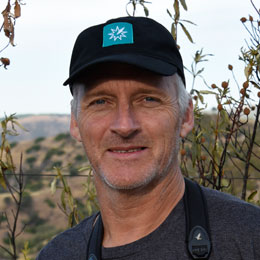

Pedro Reali
Pedro is excited for this blend of wildlife-rich habitats, hill tribe cultures, and sacred Buddhist temples.