
Nuuk to Halifax
onboard Silver Wind
September 16 – October 1, 2027


Greenland & Canada Cruise
Few voyages link Greenland, Baffin Island, Labrador, and Newfoundland in a single passage, and this expedition from Nuuk to Halifax does just that. Explore the crystalline icebergs, staggering wildlife, and endless fjords of western Greenland. On Baffin Island, visit Inuit communities that have thrived for millennia in this icy realm. Immerse yourself in Labrador’s impossibly remote Torngat Mountains National Park, steeped in Inuit heritage. Hike the Mars-like Tablelands of Newfoundland's Gros Morne National Park and gain a true sense of life along Canada’s remote eastern edge. Wildlife enthusiasts will search for Walrus at haul-outs, and Harp Seals, Humpback, Minke, and Fin Whales in these nutrient rich arctic waters. Birders will delight in catching the fall migration of various loons and auks. Join Apex on our Greenland and Canada cruise for a rare journey through the Far North Atlantic.


Destinations
- Travel by Air
- Travel by Road
- Travel by Boat
- Travel by Bullet Train
- Travel by Rail
- Travel by Dog Sled
- Day 1
- Day 2
- Day 3
- Day 4
- Day 5
- Day 6
- Day 7
- Day 8
- Days 9 & 10
- Day 11
- Day 12
- Day 13
- Day 14
- Day 15
- Day 16
-
Thursday, September 16: Arrive Montreal, Canada
Arrive in Montreal, located on an island along the Saint Lawrence River, and transfer to your hotel. Stroll the charming streets before returning to the hotel for a welcome dinner, where you will meet your expedition leaders and fellow travelers.
-
Friday, September 17: Montreal / Nuuk, Greenland / Embark Silver Wind
After breakfast, transfer to the airport for your charter flight to Nuuk, Greenland’s capital. Established in 1728 as the nation’s first town, today Nuuk is Greenland’s economic and cultural hub, home to more than a third of its population. It’s practically cosmopolitan compared to the rest of Greenland, possessing the country’s only traffic lights, roundabouts, and university. Still, Nuuk exudes an unmistakable charm. Depending on flight times, which are very weather dependent, take in some of Nuuk’s landmarks. See the cultural house, Katuaq, whose architecture was inspired by the play of the Northern Lights on ice. Stops may include city hall, the parliament building, and the bright red, wooden Church of our Saviour, whose towering spire provides a noticeable landmark. This afternoon, embark the Silver Wind, your home away from home for the next 16 nights. Be on deck as the ship leaves port and heads north.
-
Saturday, September 18: Evighedsfjord
Look for Humpback, Minke, and Fin Whales as you head up Greenland’s west coast. Reach the nearly 50-mile-long Evighedsfjord, or “Fjord of Eternity,” with cliffs on each side that can exceed 6,500 feet. Travel partway up Evighedsfjord, cruising to the first of 12 glaciers here—Sermitsiaq, which is the widest and most unique, in that it flows into two fjords at once. Conditions permitting, take Zodiacs to the glacier and surrounding cliffs for a better look. Look for the area’s abundant Caribou as you sail back out to the mouth of Evighedsfjord.
-
Sunday, September 19: Sisimiut
Further up the Greenland coast stands Sisimiut, a former whaling port and the second largest town in Greenland, with a population just over 5,500. Sisimiut’s main trade is fishing, and the town accommodates a large fleet of trawlers and a modern shrimp-shelling factory. It is the southernmost town on Greenland’s west coast in which sled dogs are used. Pass under a large arch made of Bowhead Whale bones to visit the town’s historic district and museum housed in a charming jumble of 18th-century wooden buildings. Stop in at one of the local handicraft workshops to see a sampling of the locals’ beautiful native stonework and sealskin garments. Don’t miss the opportunity to taste Greenlandic delicacies, including seafood and cured meats.
-
Monday, September 20: At Sea
Enjoy lectures about the fascinating history of polar exploration, as well as the natural history of the Canadian Arctic, as you make the roughly 500-mile trip across the Davis Strait today. Spend time on deck watching for White-beaked Dolphins, Minke Whales, and seals.
-
Tuesday, September 21: Iqaluit, Nunavut, Canada
Come ashore at Canada’s newest capital, located at the head of Frobisher Bay in southeastern Baffin Island. Founded in 1942 as an American air base, Iqaluit is now Nunavut’s largest and fastest growing community, and the political and economic hub of the Canadian Arctic. Walk through town and see the many colorful Inuit murals and carvings displayed along the streets. You may opt for a tour of the Nunatta Sunakkutaangit Museum, housed in a former Hudson Bay Company building, with an incredible collection of Inuit artwork and artifacts, including tools, boats, jewelry, and clothing. Others may choose to head out for a hike in nearby Sylvia Grinnell Territorial Park. Here, you can see ancient Thule ruins, and a variety of wildlife—Caribou and Arctic Fox are common sightings, along with several late migrating avian species, including Rock Ptarmigan, Lapland Longspur, and Peregrine Falcon. Look for woodsia ferns adapted to the Arctic environment and Purple Mountain Saxifrage, the official flower of Nunavut.
-
Wednesday, September 22: Lady Franklin Island / Monumental Island
Enter the Davis Strait this morning and embark on a Zodiac exploration of isolated Lady Franklin Island, named for the wife of Sir John Franklin, the 19th-century Arctic explorer who died trying to discover the Northwest Passage. Lady Franklin is home to striking vertical cliffs of ancient Archean rock, likely some of the oldest stone in Canada. Next, head to nearby Monumental Island. Cruise in Zodiacs around its exposed rocky cliffs as Walrus have been known to haul out here. Look for them, and groups of curious Harp Seals, on the many skerries by the island. There is also a chance to spot a Polar Bear along the shoreline.
-
Thursday, September 23: Lower Savage Islands
This morning, arrive at the Lower Savage Islands, a group of three main rocky islets off the southern tip of Baffin Island. Polar Bears are known to spend the summer months here as they have plenty of land to roam and opportunities to feed as the ice has vanished from the summer’s warm temperatures. Conditions permitting, explore the narrow channels between the islands by Zodiac to see the unusual rocky formations.
-
Friday & Saturday, September 24 & 25: Torngat Mountains National Park
Brutal and beautiful, Torngat Mountains National Park in Labrador’s extreme north is Canada at its most remote and spellbinding. Here in the Torngat Mountains, peachy-green peaks rise above deep fjords and vast, treeless tundra. If the ancient terrain seems to be whispering stories, you’re not alone—the Inuktitut name Tongait means “Place of Spirits.” Take two days to hike, visit sacred archaeological sites, cruise the coastline by Zodiac, and watch for Polar and Black Bears, Arctic Fox, and Caribou. Torngat is the only national park in Canada that is run entirely by local Inuit (Nunatsiavut and Nunavik) people, and they are your best guides through this mesmerizing land.
-
Sunday, September 26: Hopedale
Feast your eyes on the ancient rocks of the Canadian Shield, a 4-billion-year-old exposed portion of Earth’s crust, as the ship sails through narrow channels and arrives at the small coastal town of Hopedale. Originally named Agvituk—the Inuktitut word for ‘Place of Whales’—this small settlement was renamed Hopedale by the German missionaries who arrived in 1782. Now a National Historic Site of Canada, the Hopedale Mission tells of the region’s history and the influence of the early Moravian missionaries on the local Inuit people. Hopedale remains a vital community hub to this day—in 2005, it was established as the legislative center of Nunatsiavut. A tour through town will reveal the vibrance it retains. Visit art galleries showcasing authentic Inuit carvings and crafts. Learn about traditional subsistence activities, witness cultural demonstrations, and get to know some locals.
-
Monday, September 27: Gannet Island, Labrador
Located 25 miles off mainland Labrador, the Gannet Islands Ecological Reserve is one of North America’s largest and most diverse bird sanctuaries. Named, in fact, for the HMS Gannet Navy ship rather than the bird, the reserve has no gannets. However, it is home to several significant bird colonies. In late September we expect to see Atlantic Puffins, Common Murres, and Thick-billed Murres. Protected since 1964, the islands only permit access on land for scientific study and research. Today, you may take Zodiacs around the islands to see the nesting cliffs and the seabirds soaring around them.
-
Tuesday, September 28: Battle Harbour, Labrador
Battle Harbour is a 19th-century village located on an island off Labrador’s coast. It was a hub for cod fishery and fur trades in the late 19th and early 20th centuries, until a devastating fire sent the local economy into decline. It was abandoned, and what remains offers visitors a unique glimpse into Labrador’s maritime past. Today, the island’s dramatic coastal scenery offers a striking backdrop to the well-preserved heritage structures that dot this “living museum.” You can walk along the narrow boardwalks, peering into the traditional saltbox houses and fishing stages. Watch for whales and other marine life around the island as well.
-
Wednesday, September 29: Woody Point, Newfoundland
Prince Edward once noted, “What the Galapagos are to biology, Gros Morne is to geology.” Along Newfoundland’s west coast, Gros Morne National Park is the eroded remnants of a mountain range formed 1.2 billion years ago, and it provides a rare example of the process of continental drift, where deep ocean crust and the rocks of the Earth’s mantle lie exposed. For this reason, and due to its sheer scenic majesty, Gros Morne National Park was designated a UNESCO World Heritage Site in 1987. The Tablelands behind the town of Woody Point, situated within the park on picturesque Bonne Bay, are probably as close to Mars as you will get. They’re composed of peridotite, like much of the surface of Mars. As the name suggests, the flat-topped mountains dwarf the tiny village of 241 inhabitants, yet Woody Point retains its character and the historic houses and buildings dating from 1870 have been beautifully maintained. Today, enjoy a hike in the Tablelands, with jaw-dropping panoramic views over Bonne Bay, Gros Morne, and the Long Range Mountains. Or, cruise through Bonne Bay, keeping an eye out for eagles, Moose, whales, seabirds, and other wildlife in this spectacular setting.
-
Thursday, September 30: At Sea
Today, travel south along the Gulf of St. Lawrence toward Nova Scotia and Halifax. Look for Humpback, Minke, and Pilot Whales in the surrounding waters, and seabirds soaring overhead. Sail past Cape Breton Island and the east coast of Nova Scotia, with its rocky islets, forested headlands, and characteristic lighthouses. Nighttime may reveal some bioluminescence in the ship’s wake.
-
Friday, October 1: Halifax, Nova Scotia / Disembark Silver Wind / Depart
Early this morning, slip into the working harbor of Nova Scotia’s capital, with its colorful tugs, naval ships, and container cranes. See the star-shaped fortress of Halifax Citadel rising above the city. Disembark the Silver Wind and transfer to the airport for your international flights home.
Details
- September 16 – October 1, 2027
- Leaders Peter Harrison & Shirley Metz
- Rates starting from $17,570 per person Rate details

Nuuk to Halifax, 2027
onboard Silver WindSuite Categories Per Person Rates Vista Suite $17,570 Classic Veranda Suite $20,570 Deluxe Veranda Suite $21,370 Medallion Suite $31,470 Silver Suite $32,370 Royal Suite $35,570 Grand Suite $38,770 Owner's Suite $42,470 Solo – Vista $29,870 Solo – Classic Veranda $35,120 Solo – Deluxe Veranda $36,520 - 16 days Trip Length
- 274 guests onboard Silver Wind
- Montreal Start
- Halifax End
Call us to reserve your spot on this exciting expedition!
Nuuk to Halifax Map
Have a question? Call us at 206.669.9272 / 800.861.6425. Prefer email?
Get in Touch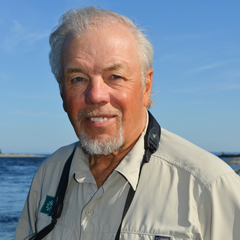

Shirley Metz
Shirley is excited for the spectacular fjords, tundra landscapes, and geological wonders you’ll discover.