Canada's Spirit Bears
September 20 – October 4, 2027
Canada Spirit Bear Tour
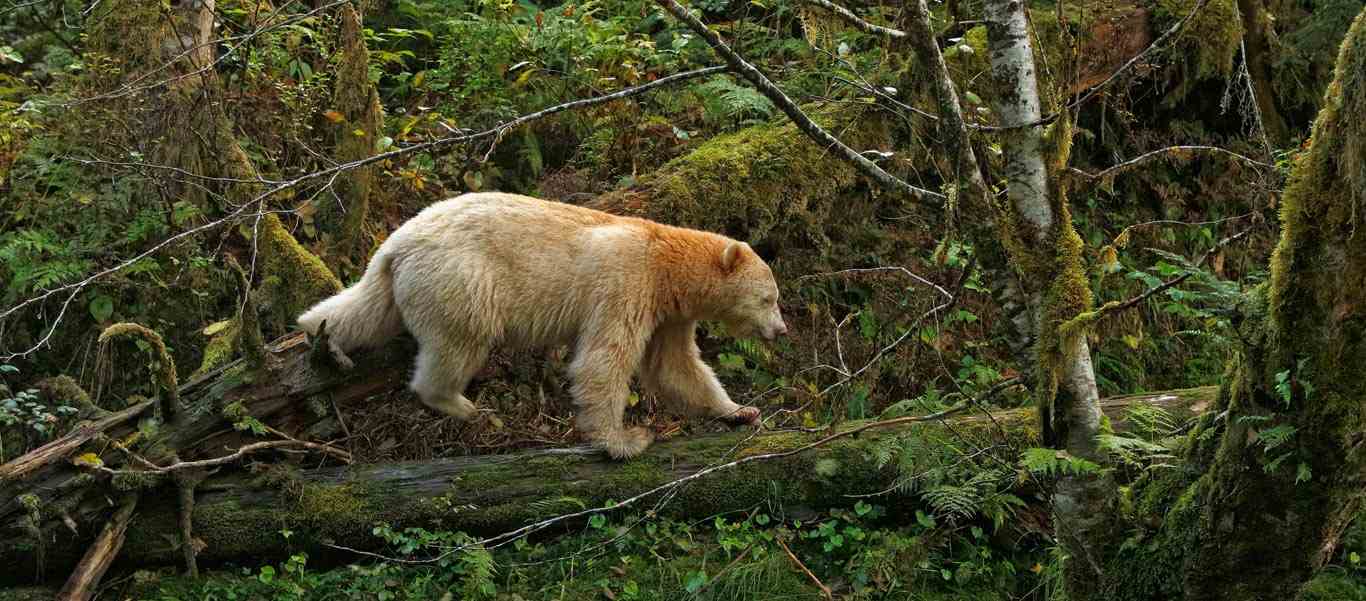
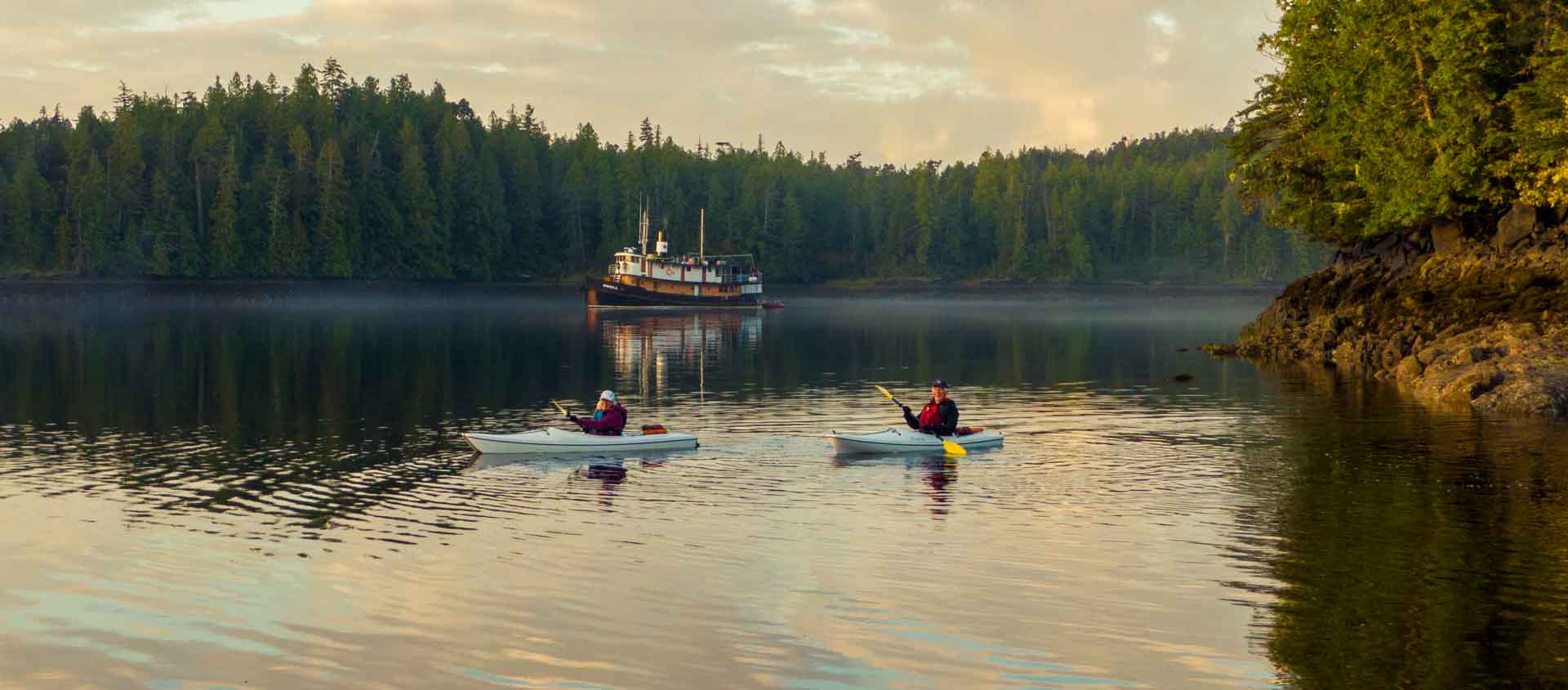
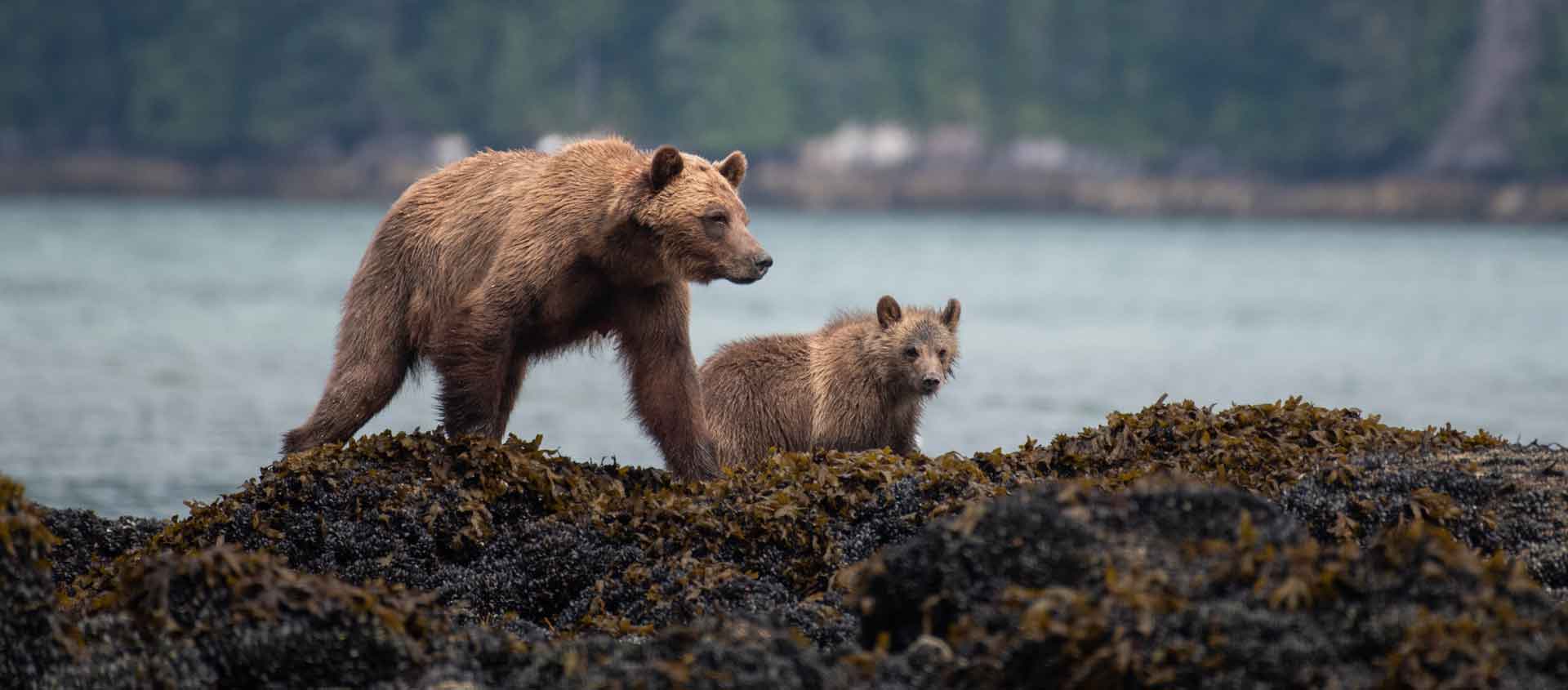
The untouched islands and misty forests of towering fir and spruce on Canada’s far western edge, are home to a rare and ghostly creature. The local Gitga’at people call it mooksgm’ol, or Spirit Bear, for its striking white coat. Its official name is Kermode Bear, and it exists only here, in British Columbia’s remote and rugged Great Bear Rainforest, the largest tract of unspoiled temperate rainforest on Earth. Spend three full days on Malcolm Island, exploring Indigenous Protected Areas that are vital habitats for Grizzlies and the salmon that sustain them. Then, board a classic wooden tugboat for your journey through a labyrinth of ancient moss-draped woods and stunning fjords that stretch back into the glacier-capped Coastal Mountain range. On this Canada Spirit Bear Tour, follow wildlife biologists and First Nations guides in search of the elusive Spirit Bear. Explore the rivers and hidden coves of this unique ecosystem, witnessing the abundance of life around you—Orcas, Humpback Whales, Grizzly and Black Bears, Sea Wolves, and Bald Eagles. Meet First Nations people who have inhabited and stewarded these lands and waters for thousands of years.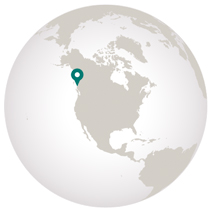


Destinations
- Travel by Air
- Travel by Road
- Travel by Boat
- Travel by Bullet Train
- Travel by Rail
- Travel by Dog Sled
-
Monday, September 20: Arrive Vancouver, British Columbia
Arrive in Vancouver, British Columbia, and enjoy the convenience of your airport hotel. Tonight, join your expedition leader and fellow travelers at a welcome dinner and toast to the adventure that lies ahead. Overnight at the Vancouver Fairmont Airport Hotel.
-
Tuesday, September 21: Vancouver / Port Hardy
Begin your journey north with a short flight to Port Hardy, a rugged town at the northern tip of Vancouver Island, overlooking Queen Charlotte Strait. Soak in the local art and ambiance of the First Nations-owned Kwa’lilas Hotel, which literally translates to “a place to sleep.” Dinner and overnight at Kwa’lilas Hotel.
-
Wednesday, September 22: Port Hardy / Port McNeill / Malcolm Island
This morning, step into the inviting Port Hardy Museum, a local gem filled with Kwakwaka’wakw relics (including 8,000-year-old artifacts), geology, and natural history exhibits. Afterwards, travel by road to Port McNeill then cross Broughton Strait by boat to reach the Sea Wolf Lodge on Malcolm Island. Dinner and overnight at Sea Wolf Lodge.
-
Thursday – Saturday, September 23 – 25: Malcolm Island
Enjoy three full days exploring the wonders of these forested islands and ancestral waterways. On your first morning, board a small boat and head for Grizzly Bear territory. En route, you may see Bald Eagles soaring overhead and Pacific White-sided Dolphins dancing in your wake. You’ll enter Indigenous Protected Areas, including key river systems that are vital habitats for Grizzlies. Experienced Kwakwaka’wakw guides will explain the bears’ behavior and their cultural significance while you observe them in the forest and along the shore feeding on salmon. On another excursion you will navigate the winding rivers aboard a dedicated river vessel. As you travel upriver, discover a quiet sanctuary of lush greenery, towering mountains, and ancient cedar trees. One day is also devoted to exploring the southern reaches of the Great Bear Rainforest—a prelude to the stunning biodiversity you’ll see in the week ahead. Watch for whales, dolphins, seals, bears, otters, eagles, and more. Dinners and overnights at Sea Wolf Lodge.
-
Sunday, September 26: Malcolm Island / Port Hardy / Bella Bella
After breakfast, set off on the next leg of your journey. Return to the airport in Port Hardy for your flight, via Vancouver, to Bella Bella on Campbell Island, on British Columbia’s Central Coast. Bella Bella is a remote island village, the traditional home of the Heiltsuk First Nation, and gateway to the Great Bear Rainforest. Upon arrival, transfer by boat to your accommodation, a rustic wilderness lodge on neighboring Denny Island. Dinner and overnight at the K̓álílṃ Oceanfront Lodge.
-
Monday, September 27: Bella Bella / Embark MV Swell
Take the morning to explore the coastal forest and sheltered inlets of Denny Island, looking for seals and eagles. Enjoy lunch at the lodge before returning to Bella Bella. Visit the monumental Gvukva’aus Heiltsuk, known as the Heiltsuk “Big House,” a newly built tribal hub that serves as the heart of Heiltsuk governance, culture, and community. Afterwards, embark the 12-guest MV Swell, a beautifully restored, classic, wooden tugboat, and your home away from home for the next seven nights. Settle into your cabin, then head up to the wheelhouse. This afternoon, you’ll set sail for the pristine waterways this ship has travelled for over one hundred years.
-
Tuesday – Sunday, September 28 – October 3: Great Bear Rainforest
The Great Bear Rainforest is at once, serene and spectacular, vast and vivacious. Its mist-shrouded valleys, glacier-cut fjords, and old-growth forests provide habitat for some of the greatest biodiversity on Earth. Among the most biologically productive coastal rainforests on the planet, the Great Bear Rainforest harbors some of the oldest and largest trees, including Sitka Spruce, Western Red Cedar, Western Hemlock, and Amabilis Fir. The fall months bring the return of the salmon, attracting Grizzlies, Black Bears, Grey Wolves, Pine Martens, and fish-eating birds like Bald Eagles, Buffleheads, Barrow’s Goldeneye, and Belted Kingfisher.
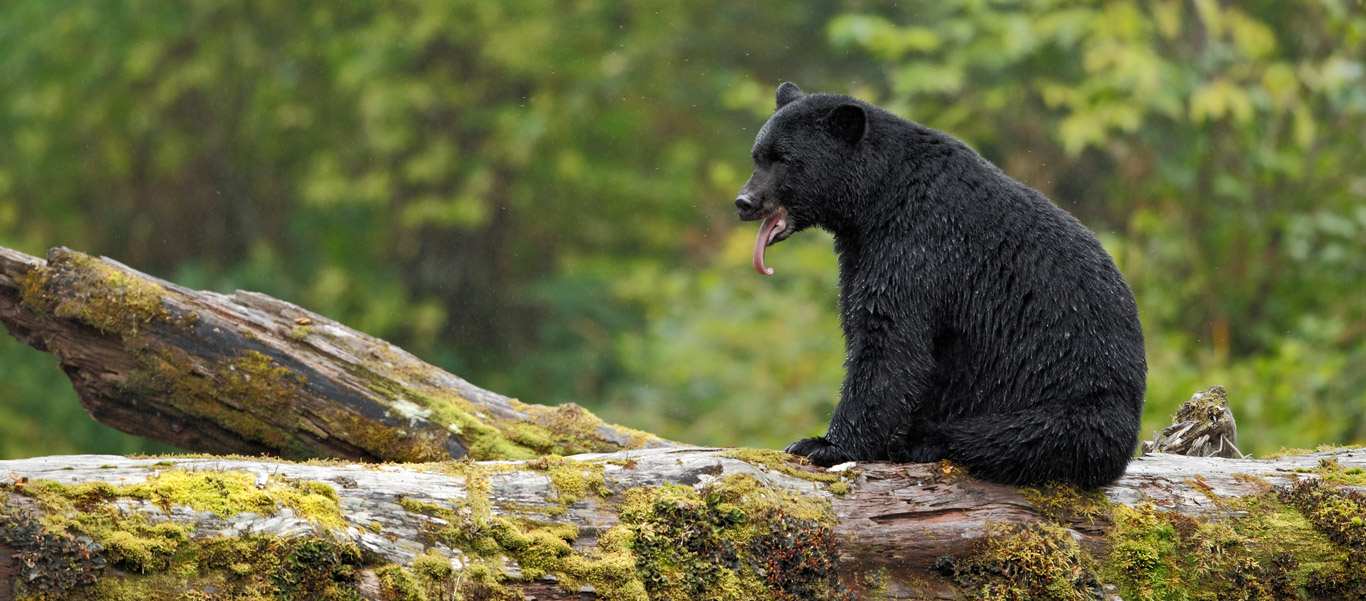
Just two islands in the Great Bear Rainforest are known to have concentrations of Kermode Bear. Neither albino nor Polar Bear, the Kermode is a subspecies of the North American Black Bear, in whose population about 10% has white or cream-colored coats due to a recessive gene. Just 400 of these Spirit Bears remain. The best time to spot a Spirit Bear is from early September to mid-October. As autumn rains swell forest streams, the salmon push upstream to spawn, drawing Spirit Bears out of the forest to fish in these narrow creeks. And yet, the Spirit Bear remains elusive and viewing them takes patience. Spend time with Gitga’at First Nation guides, sit quietly on the banks of a salmon stream, surrounded by moss and lichen covered trees, and wait. With luck, you may see the revered Spirit Bear, as well as more Black Bears.
Cruise into Fjordland Conservancy and gaze in awe at the dramatic granite cliff faces and towering waterfalls. Go ashore for interpretive rainforest hikes, kayak in secluded coves, and walk the shoreline at low tide to see Purple Sea Stars and Giant Green Anemone. Load into Zodiacs for an up-close estuary and coastal river cruise where you might see a mother Grizzly Bear teaching her cub how to catch salmon. Visit the First Nations village of Klemtu, tour through the Klemtu Big House, and learn of their ancient traditions.
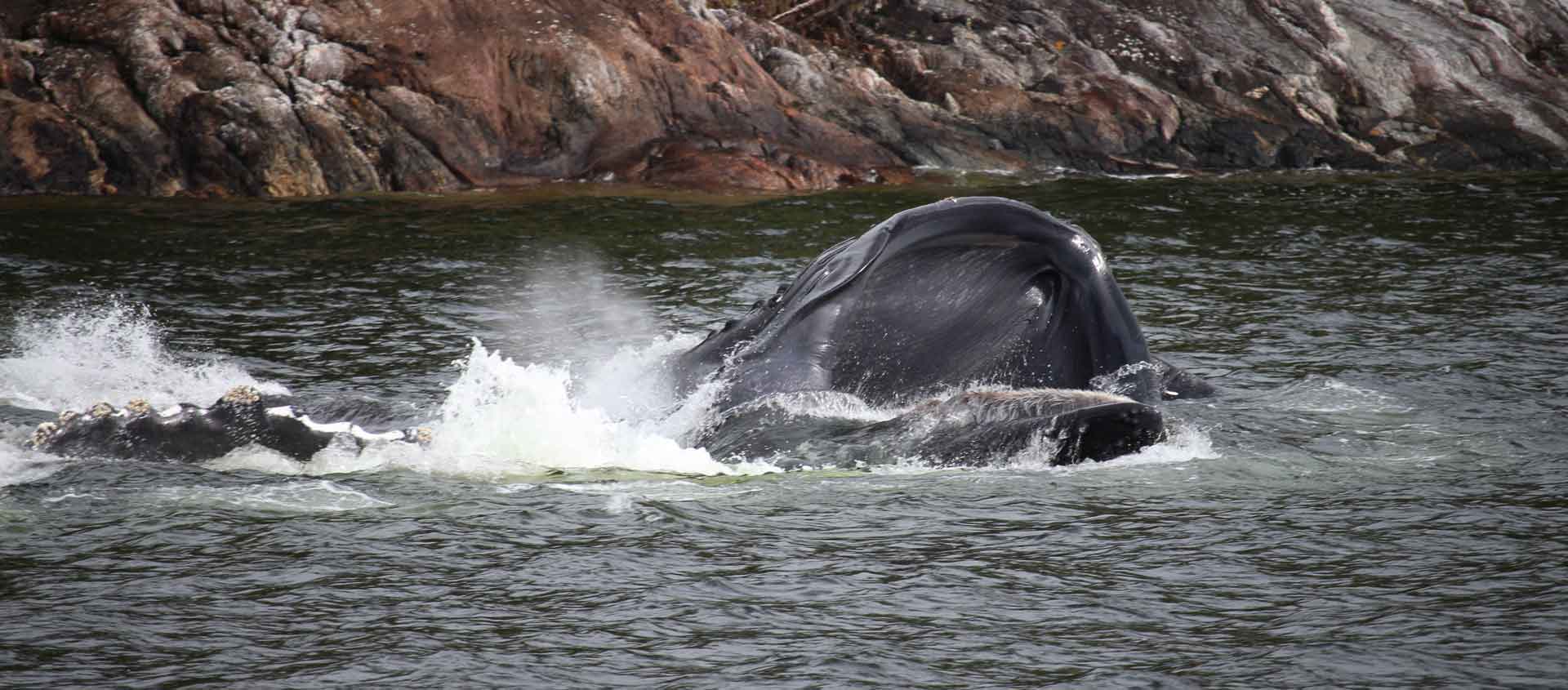
As you head into Whale Channel, be on the lookout for Orcas, Humpbacks, and Fin Whales known to frequent these waters. You might be fortunate to witness a group of Humpbacks bubble-net feeding—watch for the characteristic ring of bubbles followed by an explosive burst at the surface as the whales gulp their trapped prey. You’ll also have the unique opportunity to visit Cetacea Lab, a remote whale research station on the southern tip of Gil Island. The researchers here use acoustic monitoring to document the behavior and habitat usage of the whales. Listen to the Humpback songs that echo through the fjords that have been recorded on their underwater hydrophones.
-
Monday, October 4: Kitimat / Terrace / Depart
On your final morning onboard, sail through Kitimat Arm, a stunning deep-water fjord forming the northernmost extension of Douglas Channel. Pass by Jesse Falls, a dramatic double waterfall cascading directly into the channel and keep an eye out for the tall dorsal fins of Orcas, attracted here by the salmon running in the Kitimat River. Disembark MV Swell when you reach Kitimat, a town perched on the edge of this vast ecosystem. Transfer to the airport in Terrace for flights homeward.
Details
- September 20 – October 4, 2027
- Leaders Kristian Gillies
- Rates starting from $29,570 per person Rate details

Canada's Spirit Bears, 2027
onboard MV SwellSuite Categories Per Person Rates Sitka Spruce $29,570 Western Hemlock $29,570 Cedar $31,170 Douglas Fir $31,170 Solo – Red Alder $34,180 Solo – Arbutus $35,385 - 15 days Trip Length
- 10 guests
- Vancouver Start
- Terrace End
Call us to reserve your spot on this exciting expedition!
Map of Great Bear Rainforest and Vancouver Island
Have a question? Call us at 206.669.9272 / 800.861.6425. Prefer email?
Get in Touch